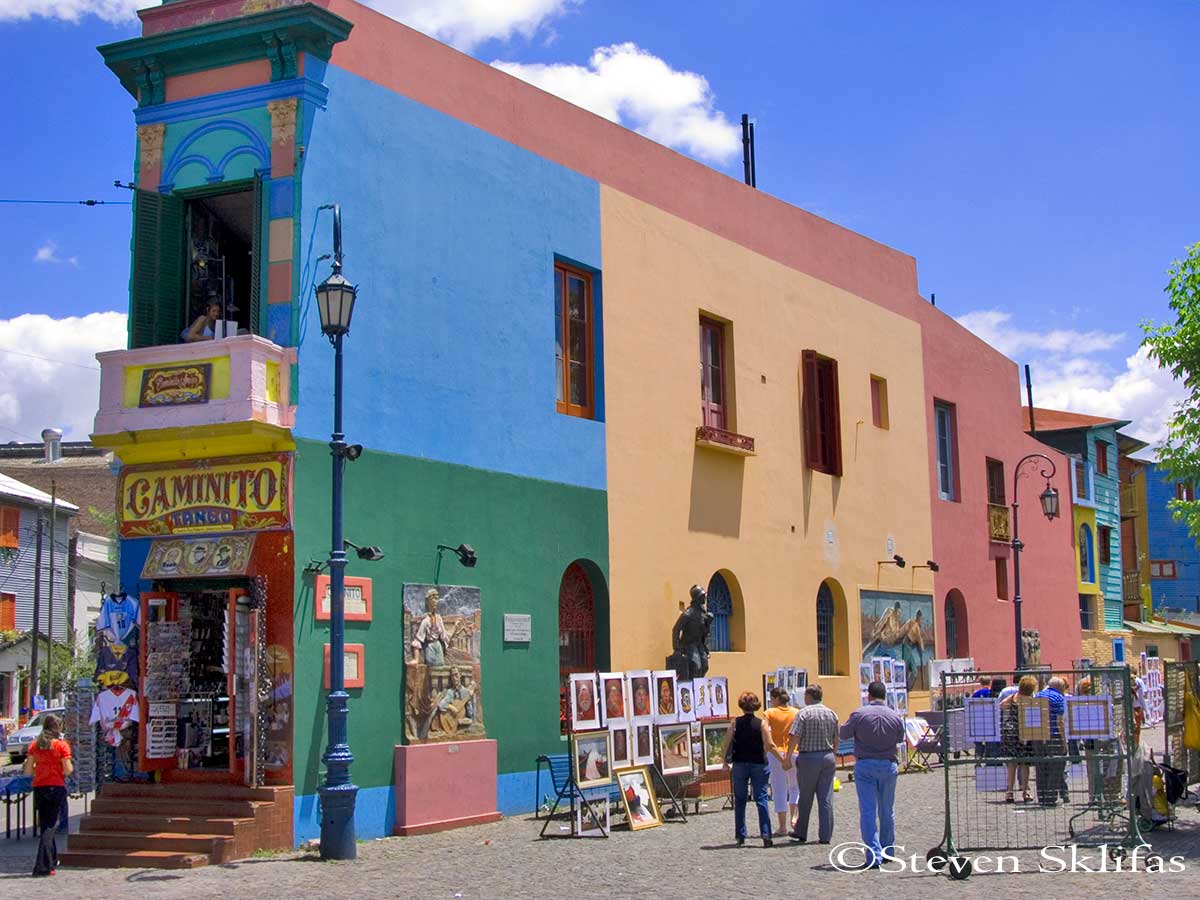
Buenos Aires is a dazzling example of old world charm. Its architecture, like its people, has been imported from the great cities of Europe.
Argentina’s sophisticated capital, Buenos Aires, is a metropolis of delights and contradictions. Geographically, it’s belongs to South America’s 2nd largest country and lays in the heart of the Latin world, yet, with over 85 percent of its residents of European descent, its lifestyle, culture and architecture are distinctly European.
Ever since being established by the Spanish on a gold exploring expedition in 1536 and until the mid-20th century, waves upon waves of European settlers favoured Buenos Aires as their new home, and in doing so, transformed it into a European city of dreams.
There’s no escaping the European influence from the very first moment you set foot in Buenos Aires. With its wide boulevards lined with 19th century Victorian and French-style homes, elegant Spanish villas, sidewalk cafes, striking parks and monuments; Buenos Aires resonates like London, Madrid, Rome and Paris.
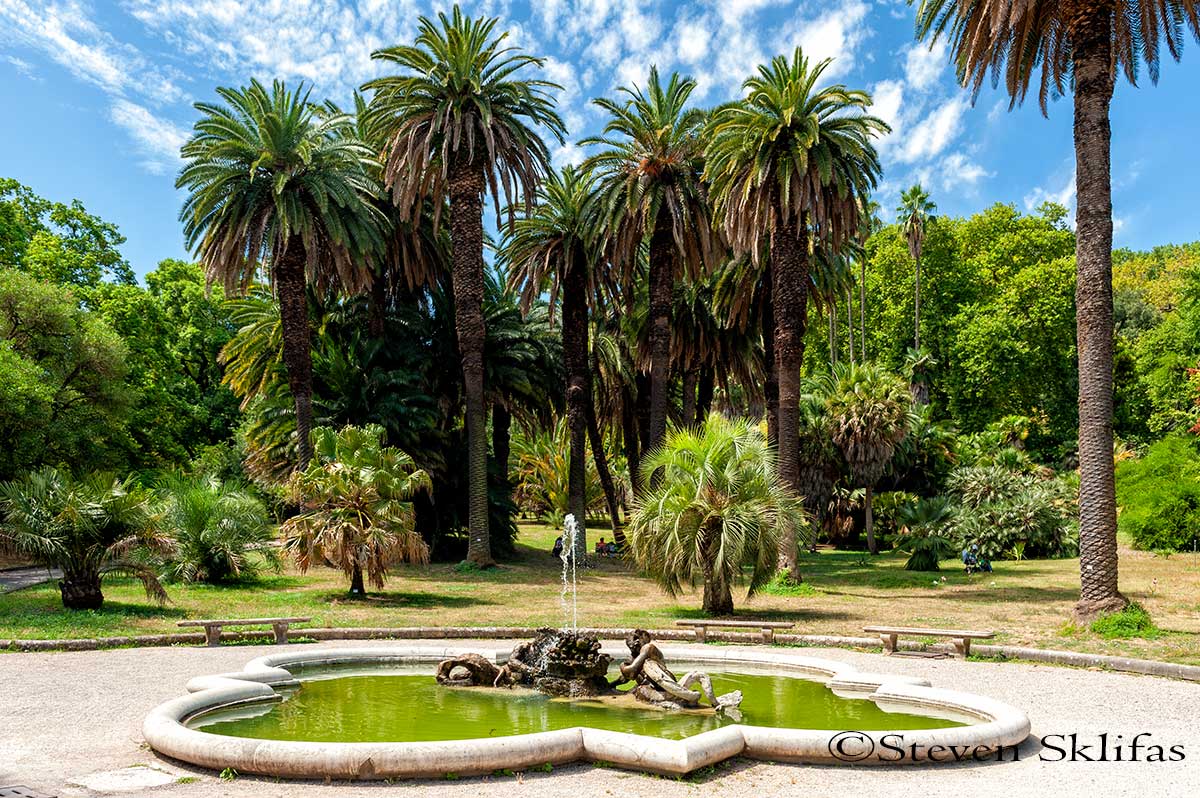
Well-secluded from the masses, the Orto Botanico di Roma (Botanical Garden of Rome) is unassumingly on the lower slopes of Gianicolo or Janiculum Hill in the medieval neighbourhood of Trastevere, Rome, Italy.
A peaceful and green sanctuary, the Garden accessible by crossing the River Tiber away from the chaotic tourist centre of Rome.
Established in 1883 on the formerly private grounds of the 17th century Palazzo Corsini, the Orto Botanico di Roma succeeded the Papal Botanical Garden dating back to the Renaissance period. Going back in history even earlier, the area that contains the Palazzo Corsini and the Botanical Garden encompassed the thermal baths of Roman Emperor Septimius Severus, who reigned between 193 to 211 AD.
Managed by the Sapienza University of Rome, the Botanical Garden spreads over 12 hectares (30 acres) of sloping land contains over 3000 plant species from all over the world. Gravel pathways gently wind around the well-marked Garden that provides a full sensory journey of smell, touch, taste and varied shades of light and colour.
The Garden is replete with various specimens of exotic Palms, a bamboo forest, a Japanese garden, a medicinal garden, various greenhouses, cascading waterfalls and fountains and exceptional specimens of mature trees, native to the area and from all regions of the world. The enchanting Orto Botanico di Roma offers a relaxing serene refuge from the hustle and bustle of Rome and is on the top of my list to visit whenever I visit Rome.
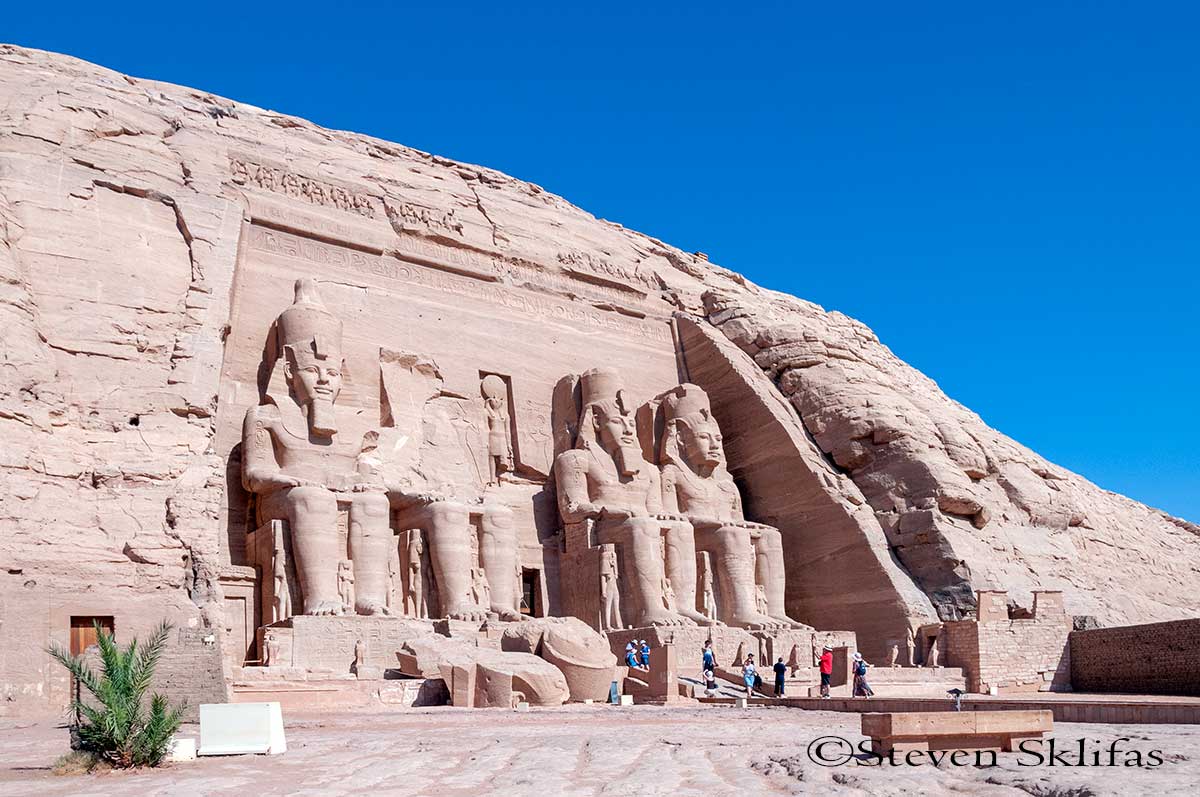
Abu Simbel Egypt is home to one of the most prominent temples of the world – the Great Temple of Ramses II.
The monumental temple complex of Abu Simbel is situated beside Lake Nasser in the heart of Nubian territory in southern Egypt near the border of Sudan. The two temples there were constructed during the 13th century BC (19th Dynasty) for the pharaoh Ramses II and his favourite wife Nefertari.
Taking the throne at the age of 20, Ramses II (aka Ramesses II, Ramses the Great) ruled for an amazing 67 years during the 19th Dynasty (1279-1212 BC) which is the second longest reign of all the ancient Egyptian pharaohs. He was also was a busy man in that he reportedly fathered over 100 children from several wives.
The main temple’s facade has four colossal 20 metre high seated sculptures of Ramses who built the Temple to remind the Nubians that he and no one else is their supreme monarch. The smaller Temple of Nefertari was built for the favourite wife of Ramses II.
What is most extraordinary about the entire complex is that the International Campaign launched by UNESCO actually saved it from becoming lost to future generations.
The entire complex was moved stone by stone to its current site in the 1960s to save it from being permanently absorbed of the rising waters from the new Aswan dam.
The new site was landscaped to match its previous location (including the hill) and what is seen today has been perfectly restored to how it was prior to the monumental move.
Abu Simbel is listed as a UNESCO World Heritage Site together with Nubian Monuments from Abu Simbel to Philae.
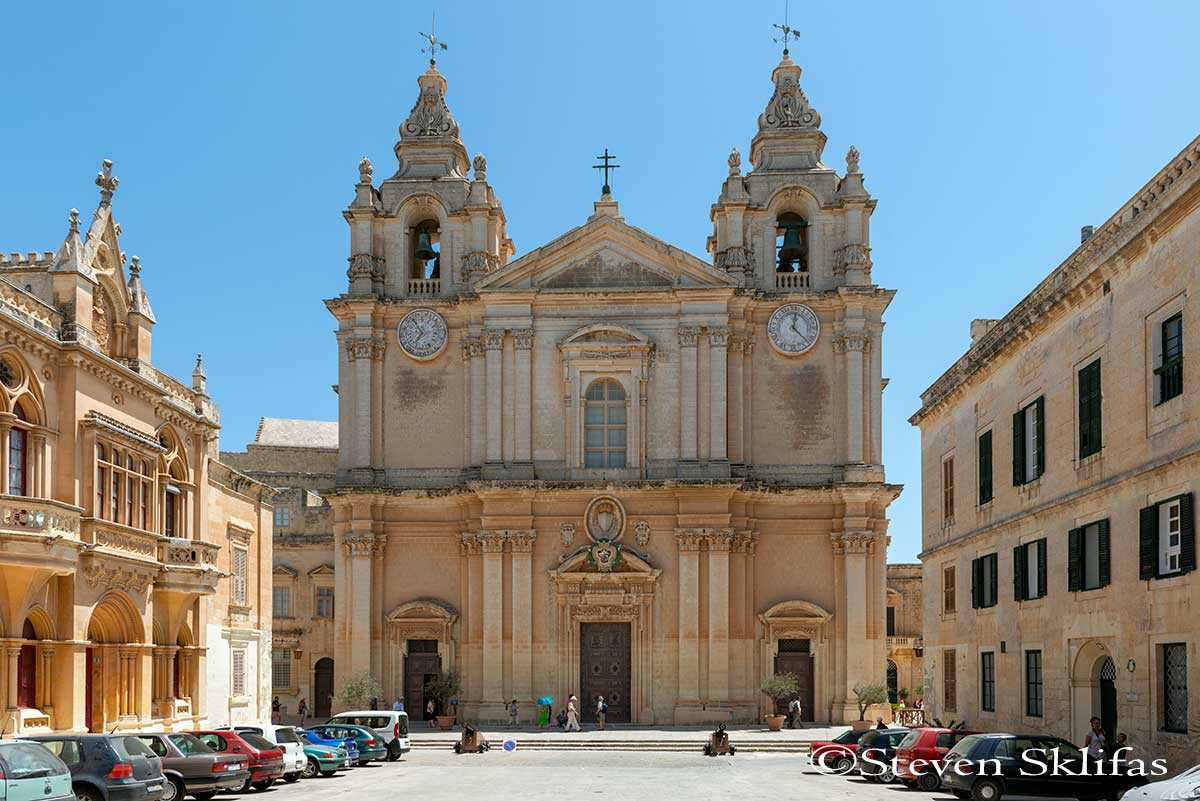
The medieval walled citadel city of Mdina is perched on a rocky outcrop in the south-west of Malta.
Mdina has been a place of sanctuary since the Bronze Age because of its naturally defensible location. The city served as the Malta’s capital from antiquity to the medieval period and during that period was the centre of the Maltese nobility and religious establishments.
Nicknamed the Silent City (only 300 inhabitants), Mdina is an elegant and well preserved fortified city. Within its solid walls lay a fascinating maze of twisting narrow alleyways flanked by yellow-sand stoned Baroque influenced architecture, some with hidden courtyards and adorned with elaborate balconies, balustrades and door knockers.
In the city’s heart is the Metropolitan Cathedral of Saint Paul, founded in the 12th century on the very site where Publius, Roman Governor of Malta, met St. Paul following his shipwreck.
Mdina is on the tentative list of UNESCO World Heritage Site and is a popular tourist attraction in Malta.
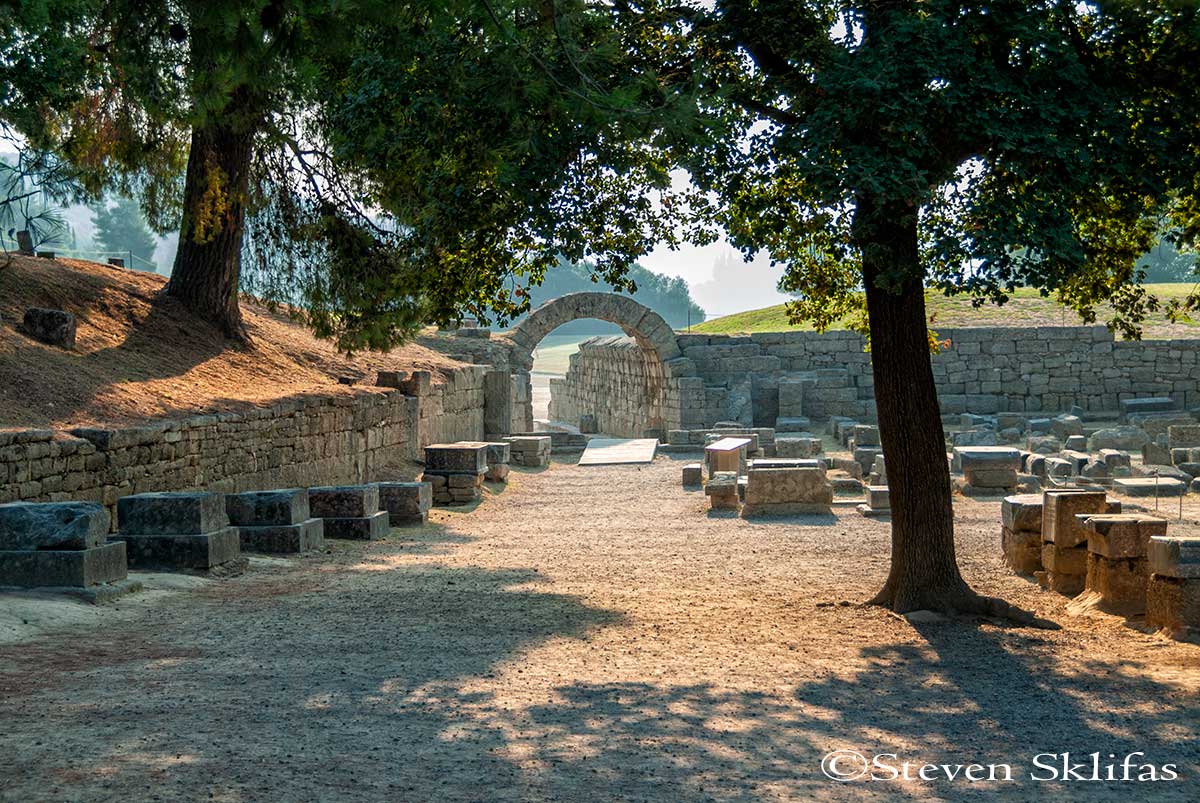
The birthplace and spiritual home of the Olympic Games, Ancient Olympia continues to captivate as it did for a thousand years from 776 BC, when Greeks assembled in war and peace to celebrate the games and life.
Ancient Olympia is magically set in a lush valley between two rivers in the western Peloponnese prefecture of Elia, southern Greece. Dedicated to the Ancient Greek God Zeus, the games which according to one legend were established by Ancient Greek Hero Herakles to honor the achievement of his 12 labours.
The games were held here every fours year’s from 776 BC onwards for over a thousand years and remarkably the champion’s name of each event is recorded.
Amidst its shady groves of pine, olive and blooming Judas trees, Olympia’s evocative ruins of its celebrated past are on show, including the remains of the Palaestra where the athletes trained, the stadium where the foot races were held and the hippodrome where the horse events took place.
The renowned 2nd century AD Greek traveller, geographer and historian Pausanias declared that although there are many wonderful things in Greece, there is a ’unique divinity’ about the mysteries of Ancient Olympia.
At its centre, in the sacred sanctuary, the glorious 5th century Temple of Zeus lays in ruins. Its colossal Doric columns lay toppled in the ground unmoved since being destroyed by tremendous earthquakes in the 6th century. Comparable in size to the Athenian Parthenon, The Temple of Zeus housed the long-lost 12-metre high golden statue of Zeus, created by the Greek sculptor Pheidias (Phidias) and one of the seven wonders of the ancient world.
Finally, its marvellous museum is full of world-class exhibits and masterpieces of antiquity, including 5th century BC statue of the winged Nike by the sculptor Paeonius (or Paionios) of Mende and the Praxiteles’ marble statue of Hermes, possibly the finest figurative sculpture ever made.
Ancient Olympia is a designated UNESCO World Heritage Site.
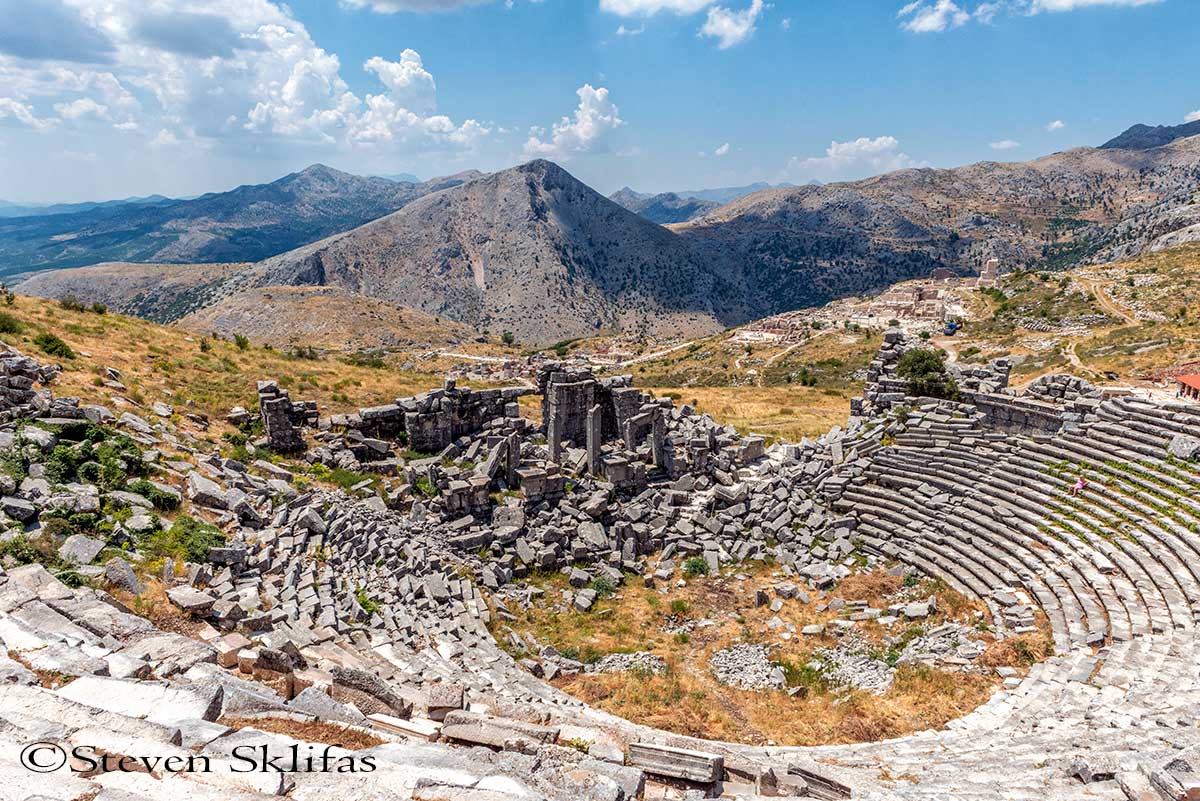
Dramatically set amongst the clouds high on the Western Taurus mountain range in Turkey, ancient Sagalassos was Hellenised, Romanised, Christianised, destroyed, abandoned, buried and then lost for centuries.
According to ancient Hittite records, Sagalassos was established around the 14th century BC in the heart of ancient Pisidia, a mountainous geopolitical region. Various empires controlled and or influenced the city over the next 1000 years, including the Phrygians, Lydians, Persians and Greeks.
A pivotal development in the history of Sagalassos occurred in 333 BC when, Alexander the Great, on his way to conquer the Persians and the known world, sacked the city after encounter fierce resistance from the Pisidian’s who had a reputation of being bold, rebellious and warlike.
Hellenism came with Alexander’s conquest of the region, and Sagalassos embraced all facets of Greek civilization and formed part of the Greek cultural territories. This had a long-lasting prosperous effect on Sagalassos as it became the most progressive city of Pisidia and new trade opportunities and routes opened up.
The Romans arrived in the 1st century BC and Sagalassos became part of the expanding Roman Empire. The city’s prosperity continued to grow and became a vital trade hub and urban centre of the region.
Sagalassos exported grain and olives and become famous for producing its signature ‘red slip ware’, which was tableware of high quality.
The city was embellished with new buildings and monuments particular during the reign of Roman Emperor Hadrian who favoured the metropolis and named it the ‘first city of the region of Pisidia’. At its peak, Sagalassos had a population in the tens of thousands and was one of the more affluent cities in Asia Minor.
The decline of Sagalassos began from around 500 AD when the city was struck by plagues, water shortages, catastrophic earthquakes and the first Arabs raids.
Sagalassos was ultimately abandoned around the 7th century with most of the population moving to the valley below. It is believed that some of the city was re-occupied in parts by a minor settlement until the 13th century, and then fully abandoned and forgotten. Natural erosion and vegetation growth subsequently covered the buildings of the abandoned city and, as a result, Sagalassos was lost for centuries until it was rediscovered in the 18th century.
The extensive site (which includes an Upper and Lower City) has been undergoing large-scale excavations and restoration since 1990 and features many well-preserved remnants from its splendid past. Highlights include the monumental Nymphaeum, Roman Baths, Heroon, Bouleterion, rock tombs, Agoras, Colonnaded Street and the great Hellenistic style Roman theatre which seated 9000 spectators and is the highest (altitude) built theatre in the world.
The ruins of Sagalassos are situated high in the Western Toros (Taurus) mountains, at an altitude of 1450-1700 metres and are near the town of Aglasun in the Burdur Province in south-western Turkey. Sagalassos is a very enjoyable day trip from the well-known port and holiday resort of Antalya, which is approximately 110 km to the south of the ancient city.
Sagalassos was added to the tentative list of sites submitted to UNESCO for World Heritage Site status in 2009.
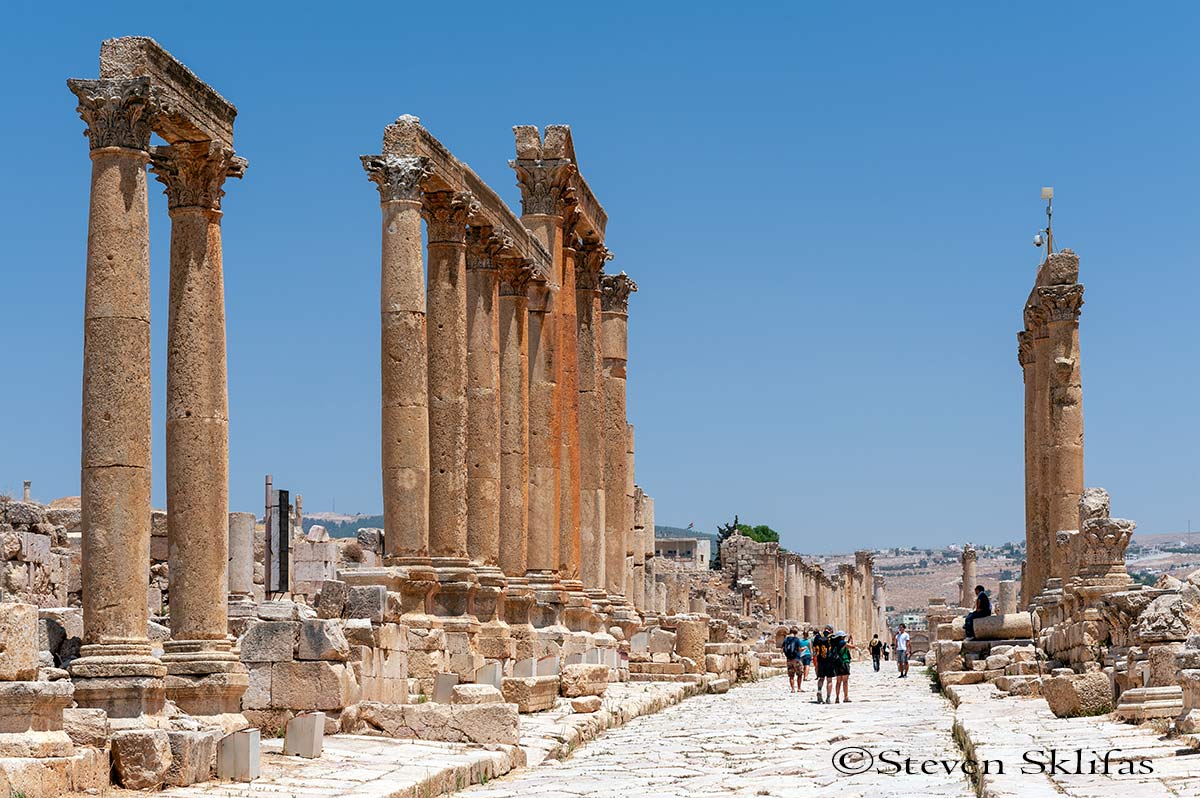
The Greco-Roman ancient city of Jerash in Jordan is one of the best-preserved ancient Roman provincial towns in the Mediterranean.
Located 48 kilometres north of Amman (capital of Jordan), Jerash (also known as Gerash) existed as a small insignificant settlement before the Greeks founded the city during the Hellenistic period after the conquest of Alexander the Great in the 3rd century. As the city grew into an urban centre, it became part of the Decapolis, a federation of Greek cities founded in the Hellenistic era within the region.
Dubbed the ‘Pompeii of the East’ because of its excellent state of preservation.
After the Roman conquest of the region in 63 BC, the city was absorbed into the vast Roman Empire and grew prosperous as more trade flowed through it. Emperor Hadrian even visited the city during 129 AD. Jerash reached its zenith and golden age during the 2nd and 3rd centuries AD, when a building frenzy took place mainly because of the generous donations of the city’s wealthy residents.
Jerash has several outstanding and ornate architectural remnants of its past. Among the more spectacular remains are a striking oval forum, the Cardo with its flanking colonnaded triumphal arches, food market, hippodrome, two theatres and temples of Zeus and Artemis.
Jerash Archaeological City is on the Unesco Tentative List, which is a list of properties considered being cultural and/or natural heritage of outstanding universal value and therefore suitable for inscription on the Unesco World Heritage List.
The Tombs of the Kings, a vast ancient archaeological necropolis with notable underground tombs situated in the city of Paphos on the south-west coast of Cyprus. It has been a UNESCO World Heritage Site since 1980.
Although historically identified as the Tombs of the Kings, no royalty is buried there. Rather, the tombs are the burial places of affluent senior government officials and nobles dating from the 4th century BCE to the 3rd century AD (Hellenistic and Roman periods).
The site name refers to the size and splendor of the underground vaults, some very elaborate with decorated walls and some others with open atriums surrounded by majestic Doric columns. Similar Tombs have been found in Alexandria, Egypt.
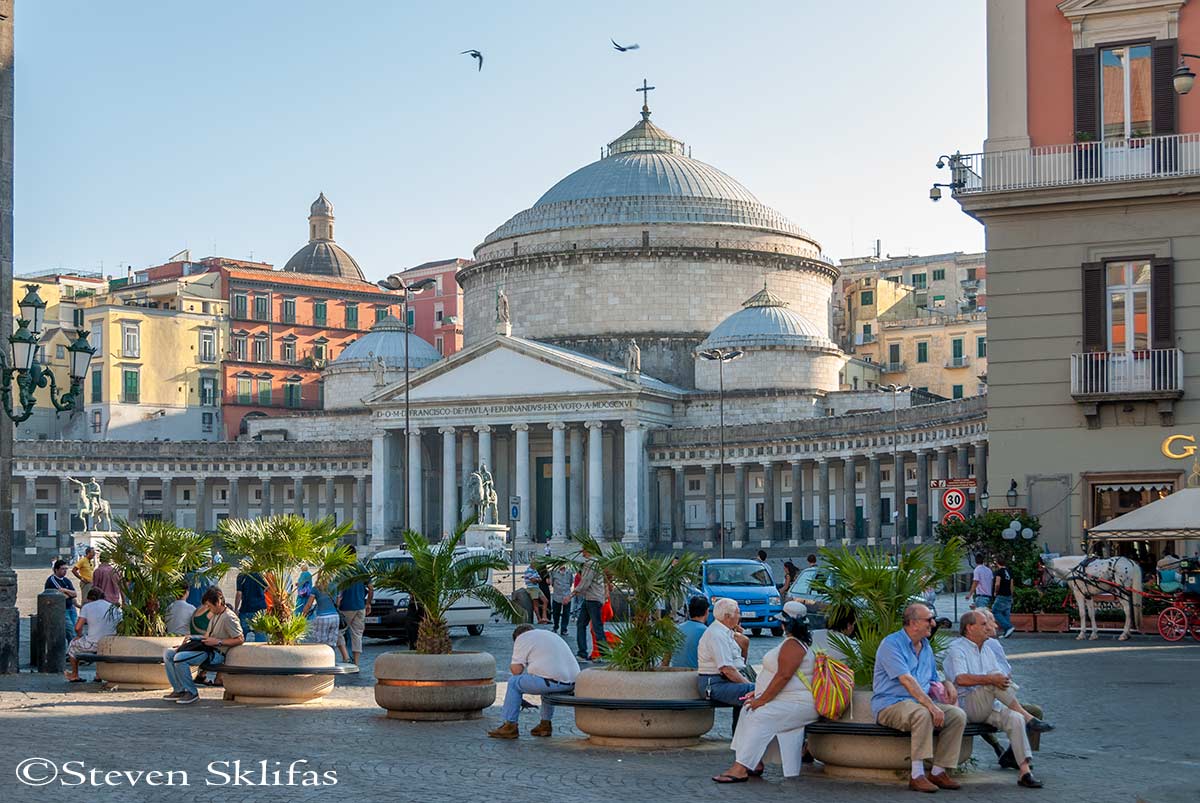
Laying in the shadow of Mount Vesuvius and rising like a mythical siren from its half-moon bay, Naples, is Italy’s third largest city and arguably its most bewitching.
Capital of the southern Italian region of Campania, Naples was founded by ancient Greek colonists between the Seventh and Sixth Centuries BC and for most of its history, since then, it’s been the desire of many conquerors and admirers and the city is filled with magnificent indelible legacies of its past.
For a period, Naples was Europe’s largest city, a capital of glamour that attracted kings, aristocrats, intellectuals and artists. Travellers on the famous grand tour acclaimed Naples to be the most glorious capital of the west.
When the 18th century famous writer and poet Goethe visited Naples, he declared it a paradise. The site of the bay, the islands and volcano the castles and villas inspired him to famously declare that ‘anyone can be forgiven for losing his mind in Naples’.
The central neighbourhoods of Naples are like an open-air museum where every element of life has been elevated to an art form. Streets are lined with authentic pizzerias, formidable fortresses, magnificent Baroque churches, grand royal palaces, lively piazzas and colourful outdoor markets.
Narrow dusty cobblestone alleys branch off the bustling streets and are replete with laundry fluttering above between houses. Whilst below, barking dogs hastily avoid being run-over by zooming scooters piled with two or three helmetless passengers. The Historic Centre of Naples is a UNESCO World Heritage Site.
The complete image gallery of Naples can be viewed via this link – Naples Italy.
All Images, Text and Content are Copyright Steven Sklifas.
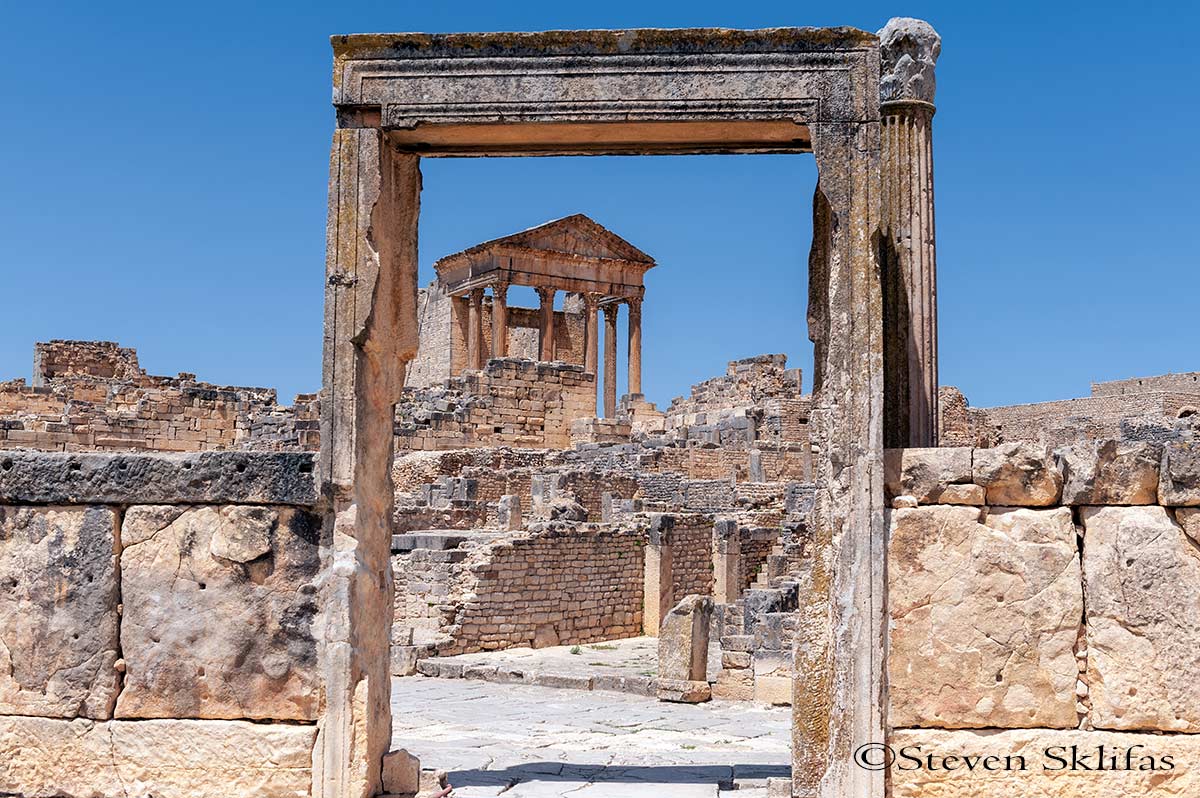
The wonderfully intact ancient Roman settlement of Dougga is located 110 km south-west of Tunis, the capital city of Tunisia.
On a hilltop (571 metres elevation) overlooking a fertile valley with olive groves and fields of grain, Dougga provides an intimate insight into life in antiquity and is a UNESCO World Heritage Site.
Originally named Thugga by the Numidians founders, Roman Emperor Caesar annexed the city and it became part of the Roman Empire. From the 2nd to the 4th century AD, under Roman rule, the city experienced its greatest period of growth and splendour when its landowners grew wealthy from the region’s agricultural production.
The region became known as the breadbasket of Rome.
The city continued to prosper under Byzantine rule, however declined in the Islamic period. Dougga has been described as the best-preserved small Roman town in North Africa and one of the contributing factors to its preservation is that families continued to live among the archaeological site ruins until 1961. Most of the inhabitants were moved to a new village, Dougga-al-Jadida.
The archaeological site of the ancient town covers around 75 Hectares, and within its borders are fine preserved examples and remnants of life in antiquity. Highlights include the impressive town centre (capitol, forum, market, square), there is a very impressive and well-preserved theatre, public baths, and even a brothel.
The complete Dougga image gallery can be viewed via this link – Dougga Tunisia.
All images, text and content on this website are copyright Steven Sklifas

 Steven Sklifas